7 Signs Your Tree Needs to Be Removed (Before It Falls)
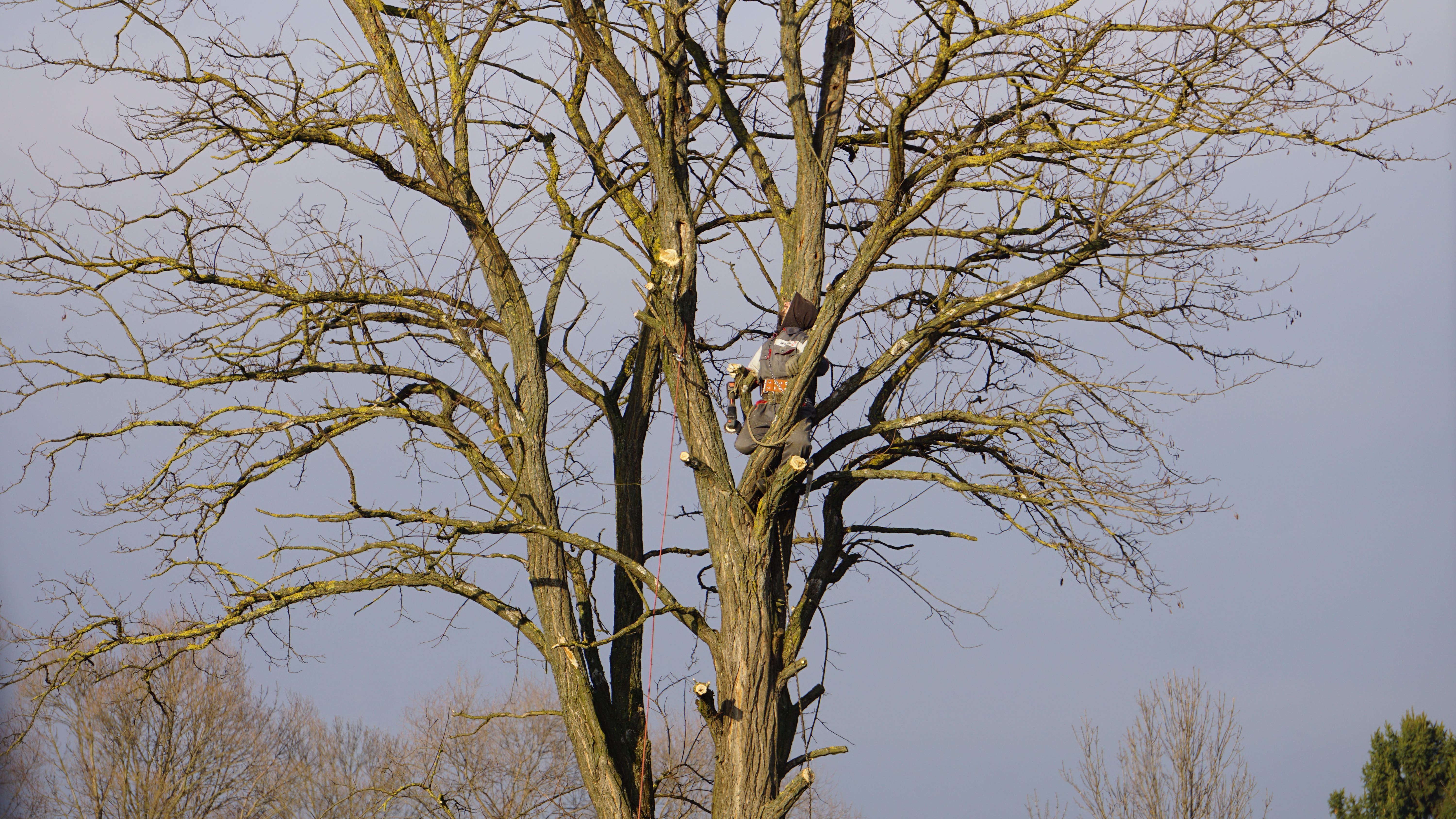
Trees are a real asset to any Utah property. They provide shade, add curb appeal, and can even lower cooling costs in our hot summers. But a tree that is dying or structurally compromised is not just an eyesore. It is a liability that can take out a fence, a roof, or a car the moment a wind gust hits it the wrong way.
The good news is that most trees give you warning signs well before they become a genuine hazard. Here is what to look for when you are sizing up a tree in your yard.
1. Large Dead Branches at the Top
Bare, brittle branches sticking out above the rest of the canopy are one of the clearest warning signs something is wrong. Arborists call this "dieback," and it almost always points to a root problem, a disease, or internal decay that is working its way up the tree.
A few dead branches in an otherwise healthy tree is not always cause for alarm. But when you see significant dieback at the crown, especially combined with any of the other signs below, it is time to call a professional.
2. A Hollow or Rotting Trunk
A hollow trunk does not automatically mean a tree needs to go. Trees can live for years with interior decay while the outer layers continue to function. But a hollow trunk does significantly reduce the tree's structural strength. If the hollow section makes up more than about a third of the trunk's diameter, most arborists will recommend removal.
Look also for soft, spongy wood at the base, mushrooms growing from the roots or trunk, or bark that peels away easily. All of these point to wood rot that can compromise the tree's ability to stay standing in a storm.
3. Fungal Growth at the Base
Mushrooms or bracket fungi growing from the base of a tree or its roots are a reliable indicator of internal decay. The fungi themselves are not the disease. They are the visible result of wood rot that has already been underway for some time, often years, inside the tree.
Conk fungi (the shelf-shaped ones) appearing on the trunk are particularly concerning. They indicate significant structural wood loss and should prompt an immediate professional assessment.
4. The Tree Is Leaning
A gradual lean that has developed over time, especially if it appeared suddenly or got noticeably worse after a storm, is a red flag. A tree leaning more than about 15 degrees from vertical is generally considered at high risk.
Look at the base when you check the lean. If you see soil heaving, cracked ground, or exposed roots on the opposite side, the root system is likely failing. That tree can come down fast and without much additional warning.
5. Large Cracks or Splits in the Trunk
Deep vertical cracks (called seams), co-dominant stems that have split apart, or open wounds that have not healed over are all structural problems. A crack that runs through a major branch junction is especially dangerous because the tree can split in two under wind load or snow weight.
Utah's spring snow storms are a common culprit for exactly this type of failure. Heavy wet snow sits in the canopy and applies enormous downward force on already-compromised branch unions.
6. Root Damage or Construction Damage
Roots extend far beyond what is visible above ground, often two to three times the width of the canopy. If significant excavation, grading, or paving happened near the tree in recent years, the root system may have been damaged or severed in ways that are not yet visible above ground.
Trees can look completely healthy for a year or two after major root damage, then decline rapidly. If you know construction happened near a large tree on your property, have it assessed even if it looks fine right now.
7. The Tree Is Too Close to Your Home or Power Lines
Sometimes a tree does not need to be dying to warrant removal. A large tree positioned directly over a roof, touching the house, or growing into power lines is a risk regardless of its health. In a heavy windstorm or under ice loading, even a healthy tree can drop large limbs.
The general rule of thumb: a tree's height should be less than its distance from any structure it could fall on. If a 60-foot tree is 30 feet from your house, it is in a zone where removal or significant pruning deserves serious consideration.
When to Call a Pro
If your tree shows one of these signs, it is worth a professional opinion. If it shows two or more, the conversation is probably about removal rather than treatment.
A qualified arborist can assess the tree's actual condition, check for things that are not obvious from the outside, and give you an honest answer about your options. Sometimes a tree can be saved with targeted pruning, cabling, or treatment. Other times, the safest and most cost-effective answer is removal before it becomes an emergency.
Our tree removal service covers Taylorsville and the entire Salt Lake Valley. If you have a tree you are worried about, we are happy to take a look and give you a free, no-obligation estimate.